Audvik Labs

The Ultimate Guide to Data Modeling: Unlocking Insights with AWS and Azure

Introduction to Data Modeling Data modeling is the process of creating a conceptual representation of data structures, relationships, and constraints within a specific domain. It serves as a blueprint for building databases and other data management solutions. As organizations increasingly rely on data-driven decision-making, the importance of data modeling cannot be overstated. Proper data modeling

Unleashing the Power of Business Intelligence with Amazon Web Services (AWS) and Azure: A Comprehensive Guide

Introduction In today’s fast-paced digital landscape, organizations are inundated with a deluge of data. This massive influx of information presents both challenges and opportunities. Business Intelligence (BI) has emerged as a crucial framework for transforming raw data into actionable insights, enabling businesses to make informed decisions. With the rise of cloud computing, particularly Amazon Web

The Challenges of Implementing Machine Learning Solutions on Azure

Title: Overcoming the Challenges of Implementing Machine Learning Solutions on Azure Introduction:As organizations increasingly seek to harness the power of data, machine learning (ML) has emerged as a pivotal tool for driving insights, automating processes, and making informed decisions. Microsoft Azure, with its extensive suite of tools designed for ML development and deployment, has become

Basic Understanding of Azure DevOps

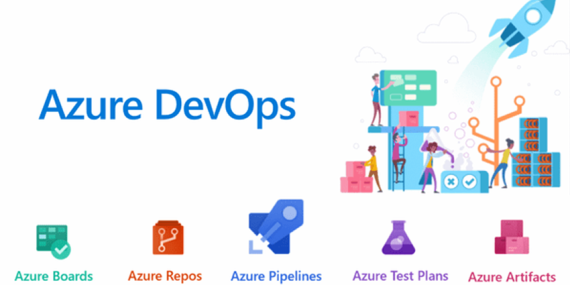
Introduction Azure DevOps is a Software as a service (SaaS) platform from Microsoft that provides an end-to-end DevOps toolchain for developing and deploying software.  It also integrates with most leading tools on the market and is a great option for orchestrating a DevOps toolchain.  Azure DevOps comprises a range of services covering the full development

Installing Azure blob using Python

How to upload files to Azure blob using Python Azure Blob storage is Microsoft’s object storage solution for the cloud. Blob storage is optimized for storing massive amounts of unstructured data, such as text or binary data. Blob storage is ideal for: Serving images or documents directly to a browser Storing files for distributed access

Service Fabric Vs Kubernetes

Service Fabric Vs Kubernetes

Fabric is a distributed systems platform that makes it easy to package, deploy, and manage scalable and reliable microservices. Service Fabric addresses the significant challenges in developing and managing cloud apps. On the other hand, Kubernetes is detailed as “Manage a cluster of Linux containers as a single system to accelerate Dev and simplify Ops”. Azure Service

Azure Service Fabric

An Introduction To Azure Service Fabric

Azure Service Fabric is Microsoft’s Platform-as-a-Service (PaaS) and is used to build and deploy microservices-based cloud applications. Fabric, in this context, is a synonym for framework. Azure CTO Mark Russinovich describes Service Fabric as a layer that understands “the binding between microservices and the underlying infrastructure that they run on.” Apps created in the Service Fabric environment

devops-services-by-audviklabs

DevOps Best Practices

For effective collaborations between the development teams and operation teams, there is a list of some of the best practices provided by DevOps which helps organizations in producing better products. DevOps speeds up how an idea goes from development to deployment. DevOps relies on automating routine operational tasks and standardizing environments across an app’s lifecycle.

Getting started with Azure Kubernetes Service

Getting started with Azure Kubernetes Services

Azure Kubernetes Service (AKS) is a managed container orchestration service, based on the open-source Kubernetes system, which is available on the Microsoft Azure public cloud. An organization can use AKS to deploy, scale and manage Docker containers and container-based applications across a cluster of container hosts. Kubernetes orchestrates clusters of virtual machines and schedules containers