Audvik Labs

Data Science VS Data Analytics

Big data has become a major component in the tech world today thanks to the actionable insights and results businesses can glean. However, the creation of such large datasets also requires understanding and having the proper tools on hand to parse through them to uncover the right information. To better comprehend big data, the fields…

What is a DevOps Engineer?

A DevOps engineer is an IT professional who works with software developers, system operators (SysOps) and other production IT staff to oversee code releases and deployments. The role calls for someone who has relevant hard and soft skills to overcome the traditional barriers between software development, QA, testing and IT operations teams and foster a…

Understanding MERN Stack in Detail

Introduction MERN stack is a collection of technologies that enables faster application development. It is used by developers worldwide. The main purpose of using MERN stack is to develop apps using JavaScript only. This is because the four technologies that make up the technology stack are all JS-based. Thus, if one knows JavaScript (and JSON),…

What is Dynamic Programming?

Introduction Dynamic Programming(DP) is an algorithmic technique for solving an optimization problem by breaking it down into simpler subproblems and utilizing the fact that the optimal solution to the overall problem depends upon the optimal solution to the subproblems.  If an issue can be broken down into subproblems, which are then broken down into smaller…

What is Google App Engine?

Introduction Google App Engine (GAE) is a platform-as-a-service product that provides web app developers and enterprises with access to Google’s scalable hosting and tier 1 internet service.  GAE requires that applications be written in Java or Python, store data in Google Bigtable and use the Google query language. Noncompliant applications require modification to use GAE. …

Continuous Integration in DevOps

Introduction Continuous Integration (CI) is a DevOps software development practice that enables the developers to merge their code changes in the central repository to run automated builds and tests. It refers to the process of automating the integration of code changes coming from several sources. The process comprises several automation tools that emphasize on the…

Data Center in Cloud Computing

Introduction A data center — also known as a datacenter or data centre — is a facility composed of networked computers, storage systems and computing infrastructure that organizations use to assemble, process, store and disseminate large amounts of data. A business typically relies heavily on the applications, services and data contained within a data center,…

Basic Understanding of Azure DevOps

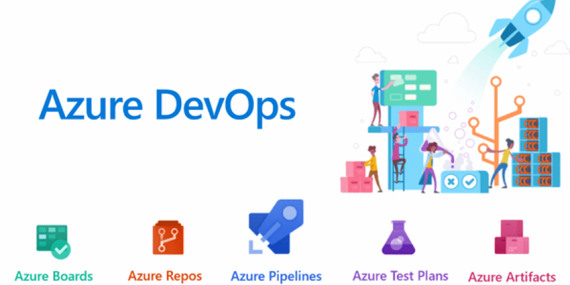
Introduction Azure DevOps is a Software as a service (SaaS) platform from Microsoft that provides an end-to-end DevOps toolchain for developing and deploying software.  It also integrates with most leading tools on the market and is a great option for orchestrating a DevOps toolchain.  Azure DevOps comprises a range of services covering the full development…

What is Cloud Load Balancing?

Introduction Cloud load balancing is the process of distributing workloads across computing resources in a cloud computing environment and carefully balancing the network traffic accessing those resources. Load balancing enables organizations to meet workload demands by routing incoming traffic to multiple servers, networks or other resources, while improving performance and protecting against disruptions in services.…

What is Instance in Cloud Computing?

Introduction A cloud instance is a virtual machine that runs your workloads in the cloud. An instance is much like a physical server. However, it is not dependent on hardware or one single data center location. You use a cloud platform to provision the instances remotely. Some cloud computing platforms include AWS, Google Cloud, and…